(Mellow Wanderer-Grand Canyon) Perhaps the most iconic Grand Canyon image is the one paying homage to Native Americans. The Watchtower at Desert View rises 70 feet on the southeastern edge of the canyon, giving visitors panoramic views down to the Colorado River. 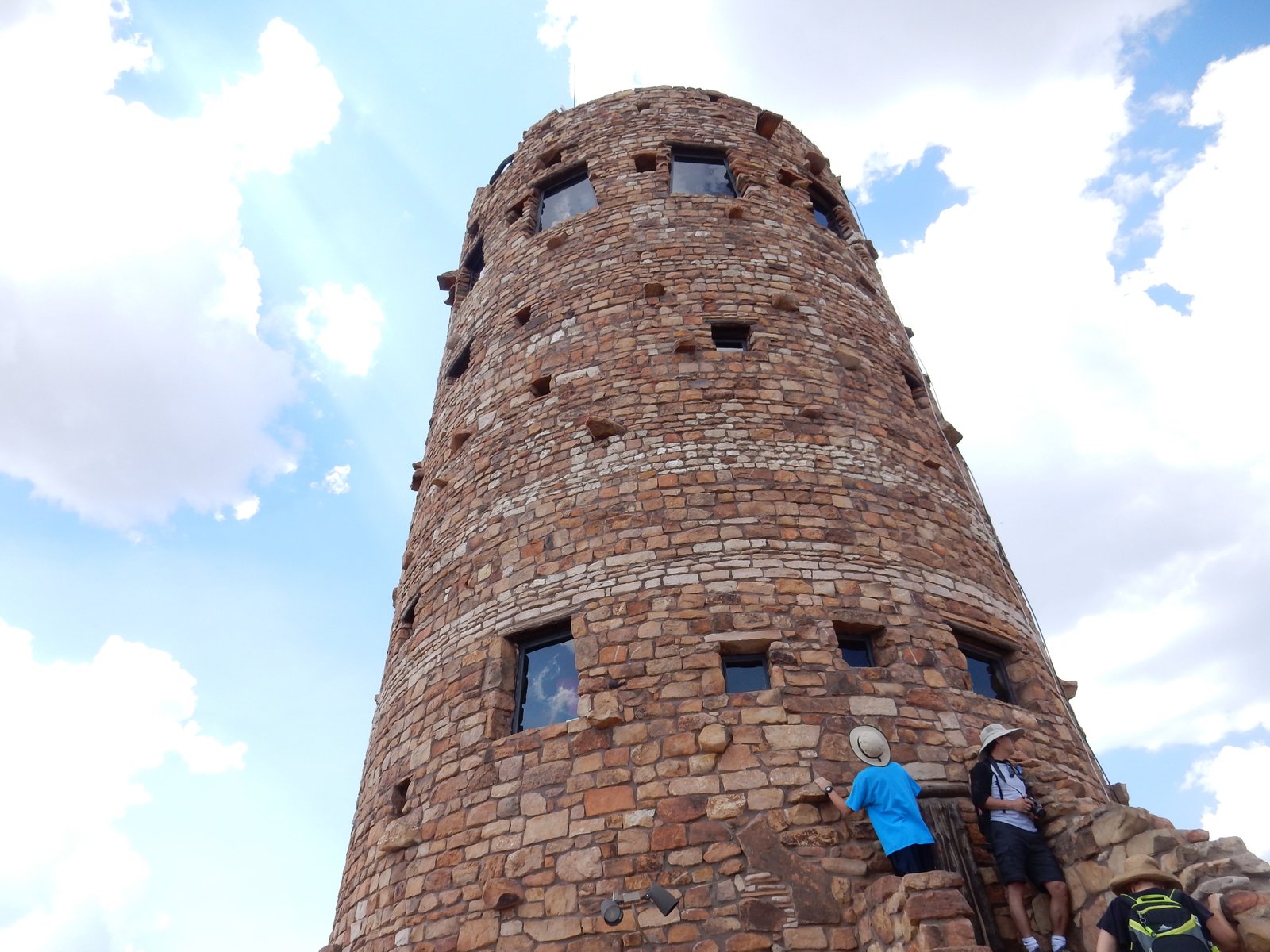 Famed 20th century architect Mary Colter designed and directed construction of the Watchtower, which opened in 1932.
  Colter described her work as a re-creation of the traditional watchtower, but made a bigger, grander version. Obviously, she was looking for maximum jaw dropping effect ( I had to hold mine just below the belt line the entire time I was there!). The tower and views from it deliver a big wow-factor. Colter honored Native American culture by designing the ground floor of the Watchtower as a kiva, a round gathering area for Pueblo religious rituals and social gatherings. Large mid-floor to ceiling framed windows lookout to the canyon with all its glorious scenery.
 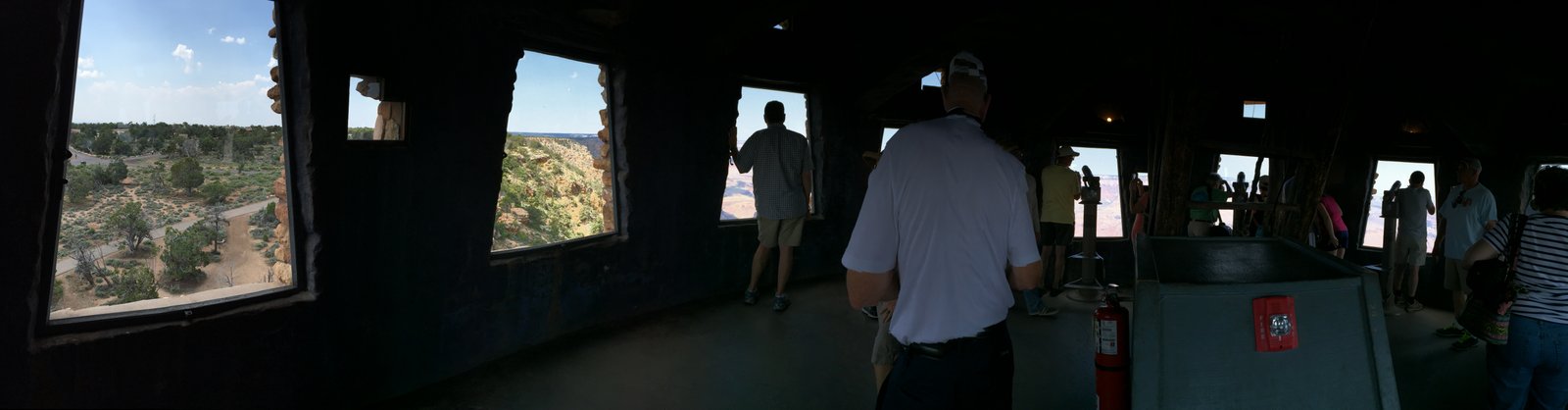 Many of Colter’s architectural creations at the Grand Canyon have fireplaces and furniture made from native trees. The Watchtower has those features, too. The wood ceiling was salvaged from logs used at the old Grand View Hotel, which was the first hotel built at the Grand Canyon.
 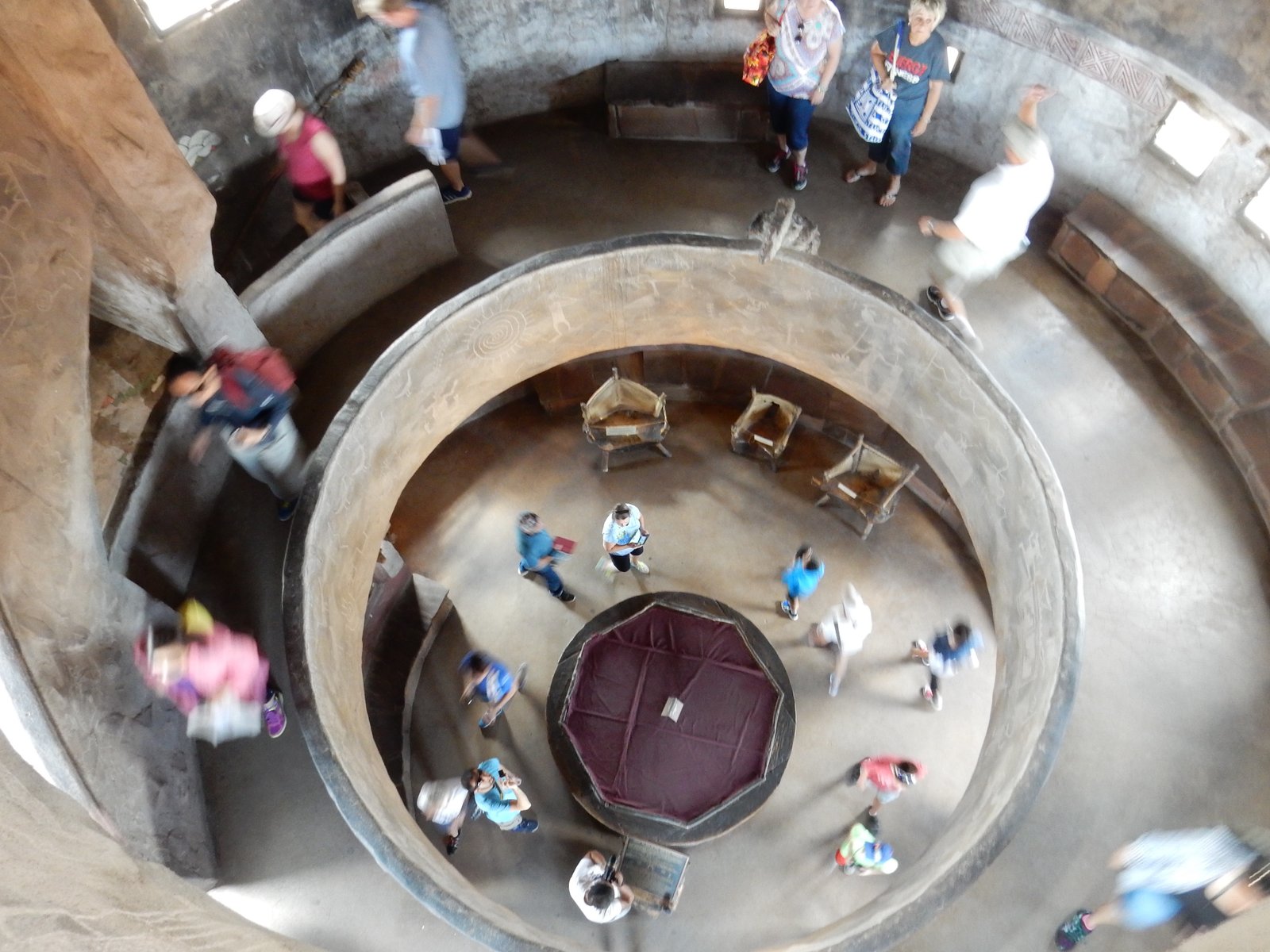 From ground level, a spiral staircase ascends to multiple levels; each has a series of lookout windows. The first level honors the Hopi tribe.
 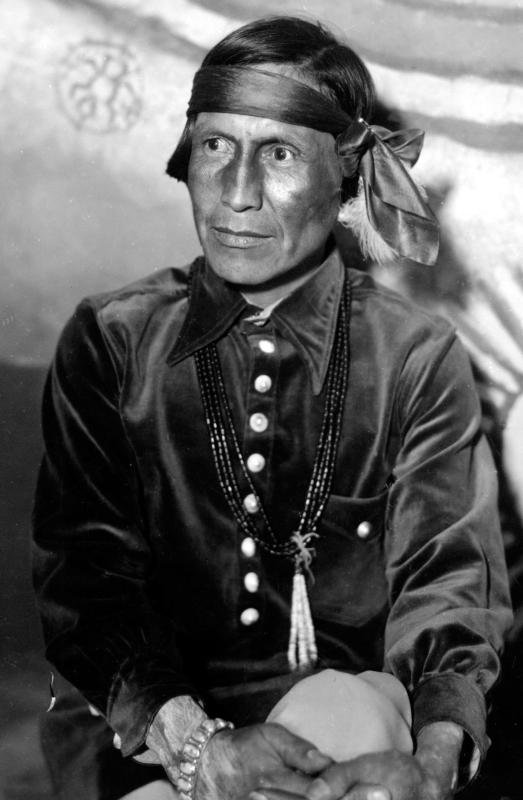 According to legend, Hopi first entered the world in the Grand Canyon through a small opening at the very depth of the canyon. Hopi believed their spirits pass back through this opening upon their deaths. Hopi artist Fred Kabotie (pictured left) added wall murals to the Watchtower to
 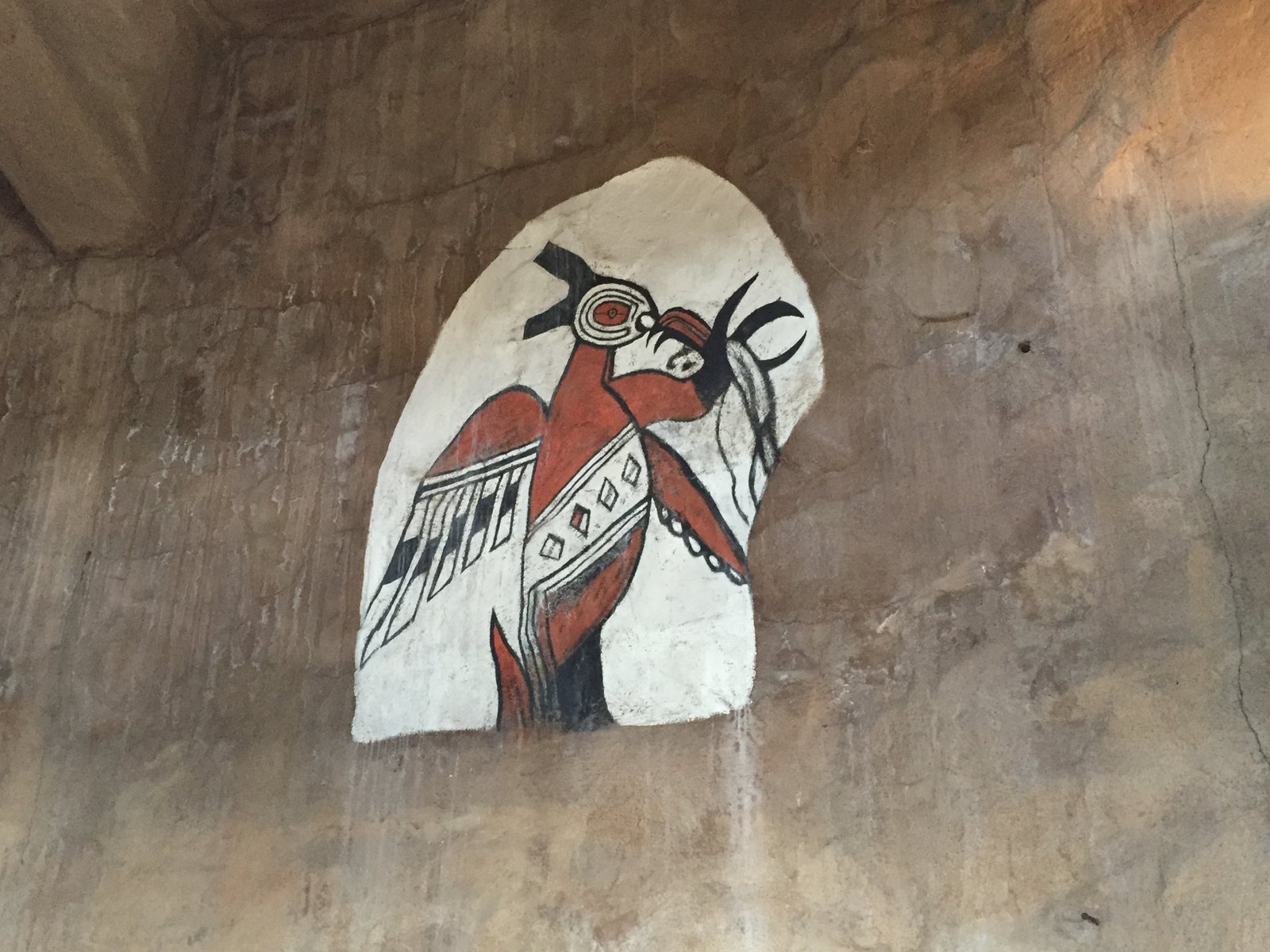 reflect Hopi heritage and history, including the traditional Hopi Snake Dance, which was an annual ritual in August. Desert View Watchtower is a National Historic Landmark and is on the National Register of Historic Places. On January 1, 2015, the Watchtower was purchased by the National Park Service from the concessionaire who managed it. NPS plans to restore the tower with an emphasis on making it more of a tribute to Native Americans. Plans are to bring back craft artists, dancers, musicians and guest speakers.
There’s no charge for entering the Watchtower. The attraction is included in the Grand Canyon entry fee. The staircase to the top is rather narrow and there are no public accomodations for the disabled and those in wheelchairs. The Watchtower and Desert View observation areas are open year round. There’s plenty of parking, including recreational vehicles, and a nearby campground. Desert View has a gas station, restrooms, trading post, snack bar and market.
[Best_Wordpress_Gallery id=”2″ gal_title=”Desert View Watchtower”]
Mellow Wanderer
Photo Credit: Mary Colter (NPS); Fred Kabotie (NPS)